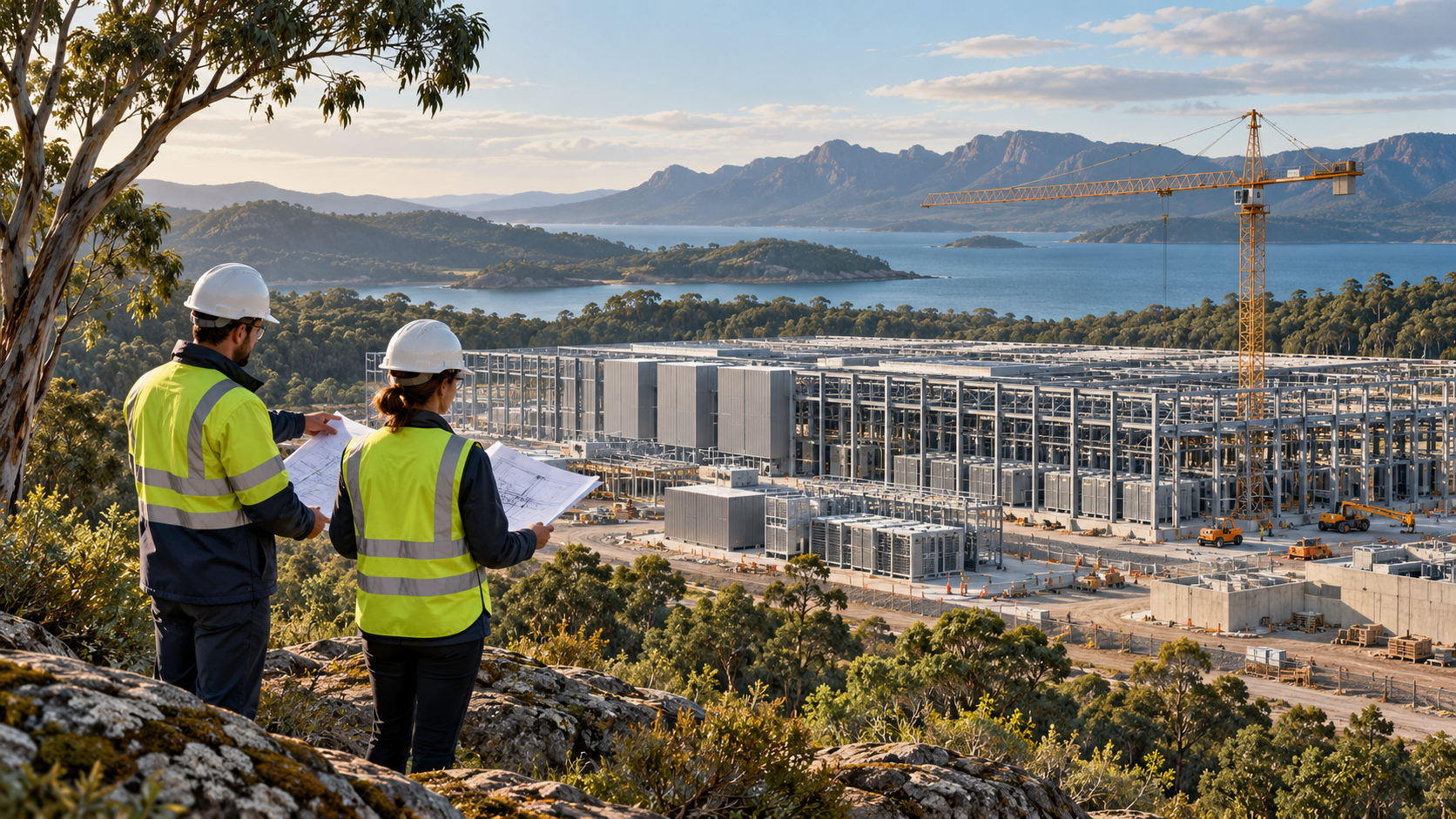
A planning process is difficult to trust when residents cannot easily tell which activities have approval, which are still being assessed and who is responsible for answering their questions. The dispute over works at Firmus’s Wesley Vale site puts that problem into sharp focus.
ABC reported on 26 September, in a story updated on 30 September, that Latrobe Council was investigating whether activities at the former paper mill site required planning approval. The proposed AI data centre has a stated capacity of 52 megawatts. The council had deferred deciding the application and asked the State Government to consider a major-project assessment.[1]
Firmus said the activities were general site maintenance, separate from the development application, and did not require planning approval. It agreed to pause the work while the council assessed it. The company also said the main development works would not begin before the necessary approvals were in place.[1]
The reported investigation is not an established finding that Firmus acted unlawfully. A fair account must include the company’s response and the outcome of the council’s assessment when that becomes available.
Make the process visible
Residents should be able to open one public page and find a dated explanation of the current position. It could identify approvals already issued, the activities they cover, the application still being considered and the authority handling each outstanding issue.
That would also help the developer. A clear record reduces the room for rumour and makes it easier to distinguish a legitimate concern from a misunderstanding about what work is permitted.
Where agencies disagree or have different responsibilities, the public should be told how those questions will be resolved. A resident should not have to become an expert in the boundaries between forestry, planning and infrastructure regulation to find the right person to contact.
Assess the place people already live in
The questions for Wesley Vale extend beyond the appearance of a building. A sound assessment should explain potential effects on nearby homes, roads, farming activity, water infrastructure and electricity supply. Noise assessments should make their assumptions clear, including the treatment of backup equipment and any overnight operation.
These are matters to investigate. They should not be presented as damage already caused by a facility that has not begun operating. Equally, the absence of operating impacts today does not remove the need to assess them before a decision.
Residents also need a meaningful opportunity to comment on the actual proposal. If its scale or design changes substantially, the public explanation should change with it. Consultation is more useful when people can see how a concern was considered and why a condition was adopted or rejected.
Put local benefits on the same public record
Any employment or business opportunities deserve the same precision: distinguish construction work from permanent jobs, identify likely skill requirements and explain opportunities for local suppliers.
The statewide consultation on draft data-centre expectations remains open until 12 October.[2] Wesley Vale’s immediate planning questions still need their own clear answers. A public register of decisions, commitments and follow-up actions would give residents and the developer a firmer basis for the discussion ahead.
Sources and further reading
Information checked on 8 October 2026. Policy proposals in this article are presented for discussion.
Joomla HTML — open to copy
Use the article headline in Joomla’s Title field. Upload its matching image to images/tasmania-news-2026-10-08/, then paste the code below into the article’s HTML/source editor.