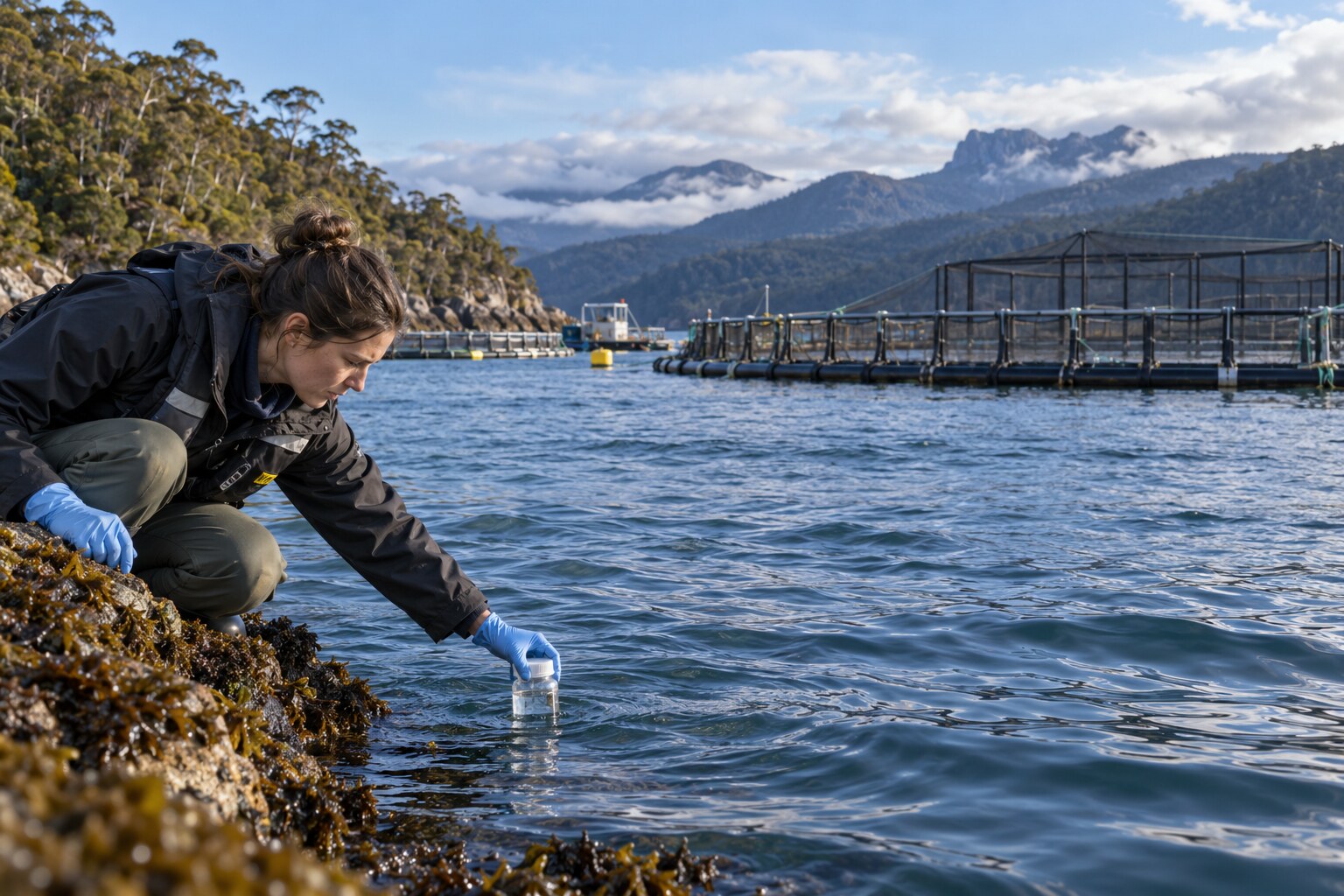
Salmon Farming and Antibiotics: Tasmania Must Apply the Precautionary Principle
Tasmania’s waterways are not an industrial waste-disposal system.
When disease occurs in intensive salmon farming, antibiotics may be administered to protect fish health. The two antibiotics currently identified by the Tasmanian EPA for use in marine finfish farming are oxytetracycline and florfenicol.
Licence holders must notify the EPA before proposed antibiotic treatment and undertake residue monitoring. That is important—but notification and monitoring should not be mistaken for a guarantee that every broader or long-term risk has been eliminated.
The World Health Organization describes antimicrobial resistance as a major global health threat. Australia’s own strategy adopts a “One Health” approach because human health, animal health and environmental health are inseparably connected.
This does not prove that current salmon-farm treatments have harmed Tasmanians. Recent EPA assessments reported low environmental risk and low or rapidly declining residues at monitored sites. Those findings must be acknowledged.
But responsible government does not wait for undeniable damage before strengthening safeguards.
Tasmanians have a right to know how much antibiotic is used, where it is used, why it is needed, how far residues travel and whether resistant bacteria or resistance genes are being detected over time.
What needs to change
- Public reporting of antibiotic use by company, lease, drug, quantity and treatment date.
- Independent water, sediment and wild-species testing, with results published promptly.
- Monitoring for antimicrobial-resistant organisms and resistance genes—not only drug residues.
- Mandatory investigation of repeated disease outbreaks and the stocking conditions contributing to them.
- Firm limits on repeated or large-scale treatments.
- No antibiotic treatment without enforceable environmental monitoring and public disclosure.
- Stronger investment in vaccines, disease prevention, lower stocking pressures and farming methods that reduce reliance on antibiotics.
Salmon farming can provide employment and regional income. That does not place it above public-health or environmental scrutiny.
Our waters belong to Tasmania. Decisions that may affect them must be transparent, independently tested and governed by the precautionary principle.