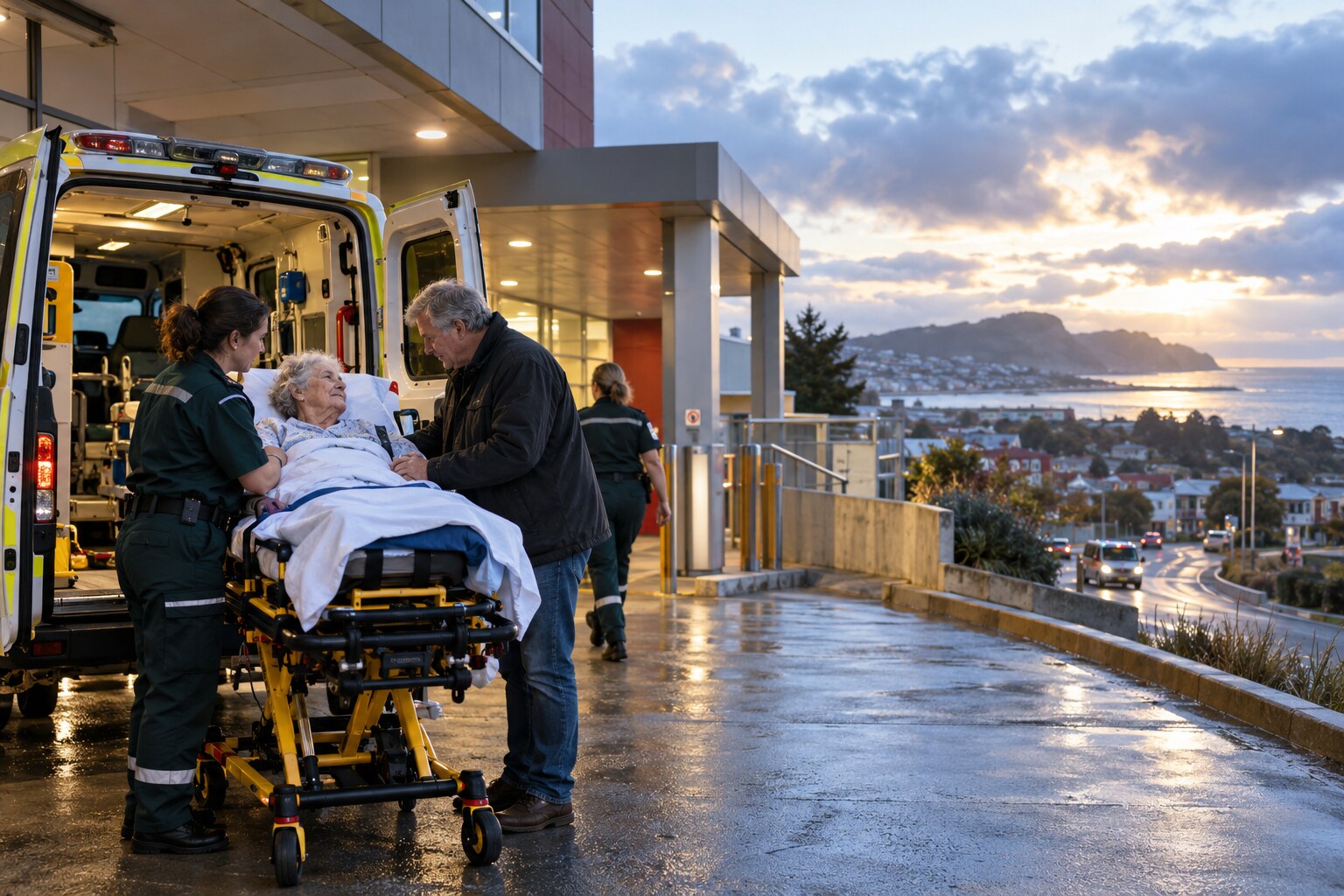
The Cost of Not Upgrading Burnie Hospital
When North-West Tasmania cannot provide a service locally, the cost does not disappear. It moves somewhere else.
It moves into ambulances, retrieval teams, hospital transfers and beds in Launceston or Hobart.
It moves into fuel bills, accommodation, unpaid leave and hours of travel for families.
It moves into overcrowded emergency departments and additional pressure on specialists, wards and operating facilities elsewhere in Tasmania.
Most importantly, it can move into the time between a medical emergency and definitive treatment.
The North West Regional Hospital is the largest major hospital serving North-West Tasmania and King Island. The Department of Health describes it as a secondary-level hospital that must transfer patients to comprehensive tertiary hospitals for some illnesses and injuries.
Tasmania’s health system is interconnected. When the North-West cannot diagnose or treat enough patients locally, Launceston and Hobart absorb that demand. Expanding southern and northern hospitals without reducing preventable transfers from the North-West risks treating the symptom instead of the cause.
The state’s North West Hospitals Masterplan acknowledges that every hospital has a role within the broader system and plans for projected demand over a 20-year period. Its implementation has been described as a $1.4 billion program.
But a masterplan is not treatment. Buildings, specialist teams, diagnostic equipment and funded services are what change outcomes.
What needs to change
We need a transparent, independently costed comparison between:
- Continuing the present level of patient transfers.
- Expanding Launceston and Hobart to absorb growing North-West demand.
- Building greater diagnostic, cardiac, stroke, surgical and critical-care capacity at Burnie.
That assessment must include costs carried by families—not merely departmental expenditure.
It should count ambulance and retrieval costs, travel time, delayed treatment, accommodation, lost work, carer responsibilities, rehabilitation and the additional beds occupied in Launceston and Hobart.
Upgrading Burnie is not asking for special treatment. It is a statewide health-system reform.
A stronger North West Regional Hospital would treat more people closer to home, reduce avoidable transfers and relieve pressure on Launceston and Hobart.
Tasmania cannot build an efficient hospital system by leaving one region dependent on long-distance transfers for essential care.
The question is not whether Tasmania can afford to strengthen Burnie Hospital. The question is how much longer Tasmania can afford not to.