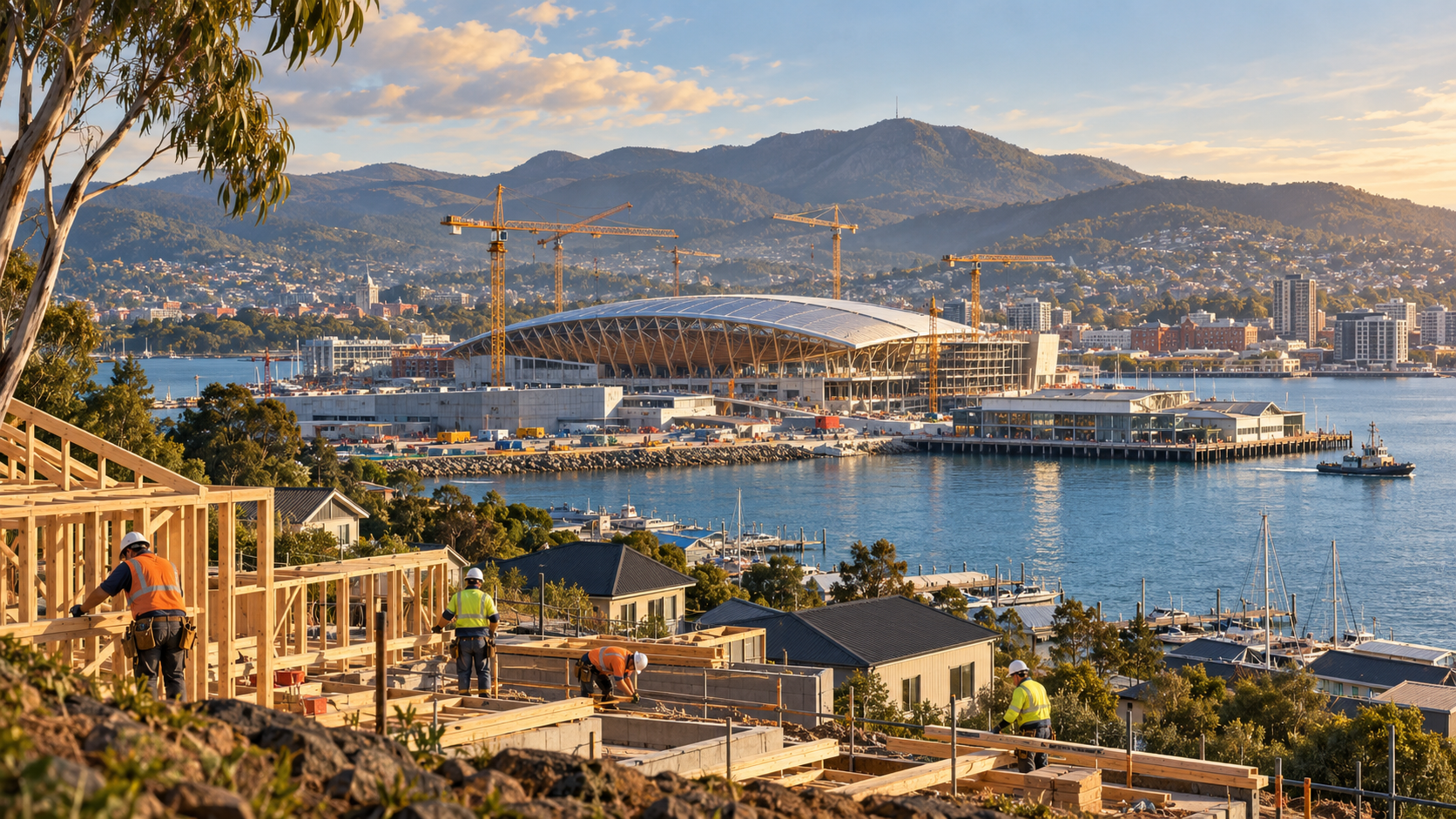
For a family waiting to build a home, a tradesperson considering an apprenticeship or a taxpayer trying to understand the state’s finances, the Macquarie Point stadium raises questions that extend well beyond football.
Earthworks began at the site in July. ABC’s recent coverage highlights the larger workforce needed to complete the project and the challenge of avoiding a budget blowout.[1][3] September reporting continued to cite a $1.13 billion construction estimate while describing calls for updated cost information before the main contract is signed.[2]
That figure should be treated as a reported estimate at that time, rather than a final all-inclusive bill. The public needs to see the latest approved numbers and understand what they include.
Publish the full financial picture
A useful cost statement would distinguish stadium construction, associated precinct and transport works, utility connections, financing, contingency allowances and future operating obligations. It would identify each funding source and explain who carries the risk of an overrun.
The figures also need dates and a consistent basis. Comparing an early estimate with a later figure is difficult if the scope changes without explanation. Publishing the differences would allow people to understand whether an increase reflects additional work, inflation, risk allowances or a higher price for the same work.
Commercial negotiations may justify withholding particular details for a time. Government should still explain what information can be released, why any remaining information is withheld and when it will become public.
Build skills as well as a stadium
The workforce issue is substantial. HIA’s October housing report identifies labour capacity as a constraint on meeting the state’s housing target.[4] ABC Hobart has also examined differing industry and union views about using the stadium project to expand apprenticeship numbers.[5]
A major project can create training and employment opportunities. Realising that benefit takes more than setting an apprentice target. Training places, experienced supervision, reliable work and pathways beyond a single contract all deserve attention.
The Government and project developer should publish a workforce plan showing expected demand by trade and year, recruitment assumptions and the role of local training. It should explain how demand will be coordinated with housing, health facilities and other essential projects.
Competition for labour is a risk to examine, not proof that the stadium has already caused a particular housing delay or price increase. Those claims require evidence. Equally, the possibility of recruiting more workers should be supported by a credible plan for training, accommodation and retention.
Measure the promised benefit
Supporters’ expectations about events, tourism and employment should be tested against transparent forecasts and, eventually, actual results. The public should be able to compare operating revenue, attendance, local procurement and ongoing costs with the case made for the investment.
Tasmanians can hold different views about the stadium and still expect careful financial management. Clear costs, realistic delivery assumptions and a coordinated workforce plan would give everyone a better basis for judging whether the project is serving the state well.
Sources and further reading
Information checked on 8 October 2026. Policy proposals in this article are presented for discussion.
- ABC News Tasmania: workforce needed for Macquarie Point stadium, October 2026 coverage
- Pulse Tasmania: stadium cost disclosure and parliamentary debate, 8 September 2026
- ABC News: works begin at Macquarie Point, 27 July 2026
- Housing Industry Association: housing delivery and workforce constraints, 3 October 2026
- ABC Hobart: competing views on stadium apprenticeships, September 2026