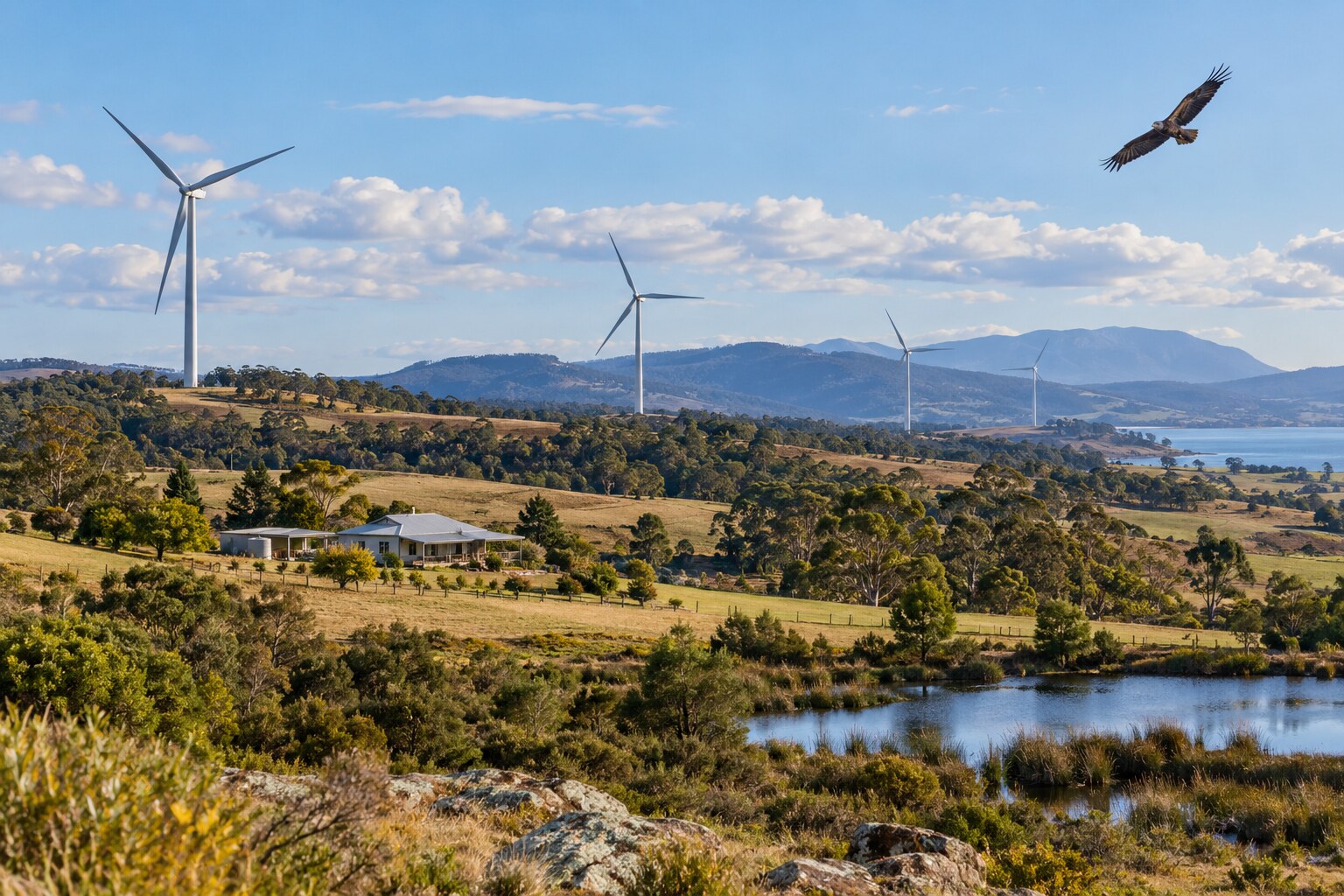
Wind Farms Need Community Consent—not Just Development Approval
Tasmania needs clean energy, but “renewable” must never be used as a word that ends public debate.
Wind farms can help reduce dependence on fossil fuels. They can also affect landscapes, wildlife, roads, nearby residents and the way rural properties are used and experienced.
National research recognises that wind developments may pose risks to birds and bats and that those risks depend on the location and design of each project. Commonwealth approvals can require bird-and-bat management plans, monitoring, curtailment or turbine shutdowns where necessary.
Tasmanian assessment material also addresses noise limits intended to protect homes during periods of low background noise, particularly at night.
The effect on property values is less certain and should not be exaggerated. Australian studies have not established that every nearby property will lose value. But statewide averages cannot answer what happens to a particular home facing a large development, new transmission infrastructure, construction traffic or a substantial change in landscape.
People should not have to prove financial loss only after a project has been built.
What needs to change
- Genuine consultation before project locations are effectively decided.
- Independent noise, health, wildlife, landscape and property-impact assessments.
- Protection of eagle flight paths and other high-risk bird and bat habitats.
- Cumulative assessment where several wind, transmission or energy projects affect the same region.
- Minimum residential setbacks based on turbine scale, terrain and measured impacts—not one politically convenient number.
- Pre-construction property valuations funded by proponents but performed independently.
- A fair compensation or purchase mechanism where substantial loss of amenity or value is demonstrated.
- Continuous noise and wildlife monitoring, with public access to results.
- Decommissioning bonds sufficient to remove turbines, foundations and associated infrastructure.
Renewable energy must be genuinely sustainable.
That means protecting the climate while also respecting communities, wildlife, landscapes and the people asked to live beside the infrastructure.